
Your garage door is the biggest, weakest panel in your home's exterior wall
Here's the direct answer: a standard garage door can fail at wind speeds far lower than your roof or walls can handle, and once it fails, wind gets inside your garage and pushes up on your roof from underneath. That's the mechanism behind a lot of storm roof damage that looks unrelated to the garage at first glance. A single-car or double-car door is the largest opening in most homes, built from thin steel or wood panels held in place by rollers, tracks, and a handful of hinges — not a continuous structural wall. When wind pressure builds against it, or a gust reverses and sucks outward, that door is often the first thing to give.
Why this matters more here than in a lot of places
Nor'easters bring exactly the conditions that stress garage doors: sustained wind from one direction for hours, followed by gusts that can hit from a different angle as the storm rotates through. That back-and-forth loading is harder on a door than steady wind alone, because it flexes panels and loosens hardware that was fine the day before. Add in the area's older housing stock — a lot of original doors here were installed decades ago to building standards that didn't account for wind load at all — and you've got doors that were never rated for this kind of stress in the first place.
What storm damage actually looks like
- Bowed or bent panels after a windy night, even if the door still opens and closes.
- Popped or stripped end hinges where panels connect, often on the side that took the direct gust.
- Bent or pulled-away tracks, usually near the top where the door flexes most.
- A door that won't seal flush afterward, letting wind-driven rain into the garage.
Any of these can seem minor right after a storm, but a door that's already flexed once is more likely to fail completely in the next event.
Concrete steps before the next storm season
- Check the track-to-wall fasteners. Lag screws and brackets loosen over years of thermal cycling. If you can wiggle a track bracket by hand, it needs to be re-secured before it's tested by 50 mph gusts.
- Inspect panels for existing stress cracks or bowing, especially on original doors that have been through many freeze-thaw cycles. A panel that's already compromised by rust or wood rot has no reserve capacity left for wind load.
- Test the auto-reverse safety feature and make sure the opener's connection to the door is solid — a door that's fighting a worn opener arm is more likely to rack in high wind.
- Consider a wind-load reinforcement kit if your door doesn't already have one. These add horizontal bracing struts across the back of the panels and anchor more firmly into the track system. They're a lower-cost option than full replacement and can meaningfully raise the wind rating of an existing door.
- Weatherstrip the bottom and sides to cut down on wind-driven rain intrusion, which is a separate but related problem from structural wind load.
- Keep a battery backup for the opener in mind if you don't have one. Nor'easters regularly knock out power for extended stretches, and a door stuck in a half-open position during a storm defeats the whole purpose of reinforcing it.
The trade-off worth knowing
Reinforcement kits buy real protection for a fraction of what a new door costs — typically a few hundred dollars installed versus well over a thousand for replacement, depending on size and materials. But reinforcement only helps a door that's structurally sound to begin with. If a door already has rot, significant rust, or bent tracks, bracing it is putting new hardware on a weak foundation. That's the point where replacement with a wind-rated door becomes the more honest answer, even though it costs more upfront.
When to call Farmingdale Garage Door
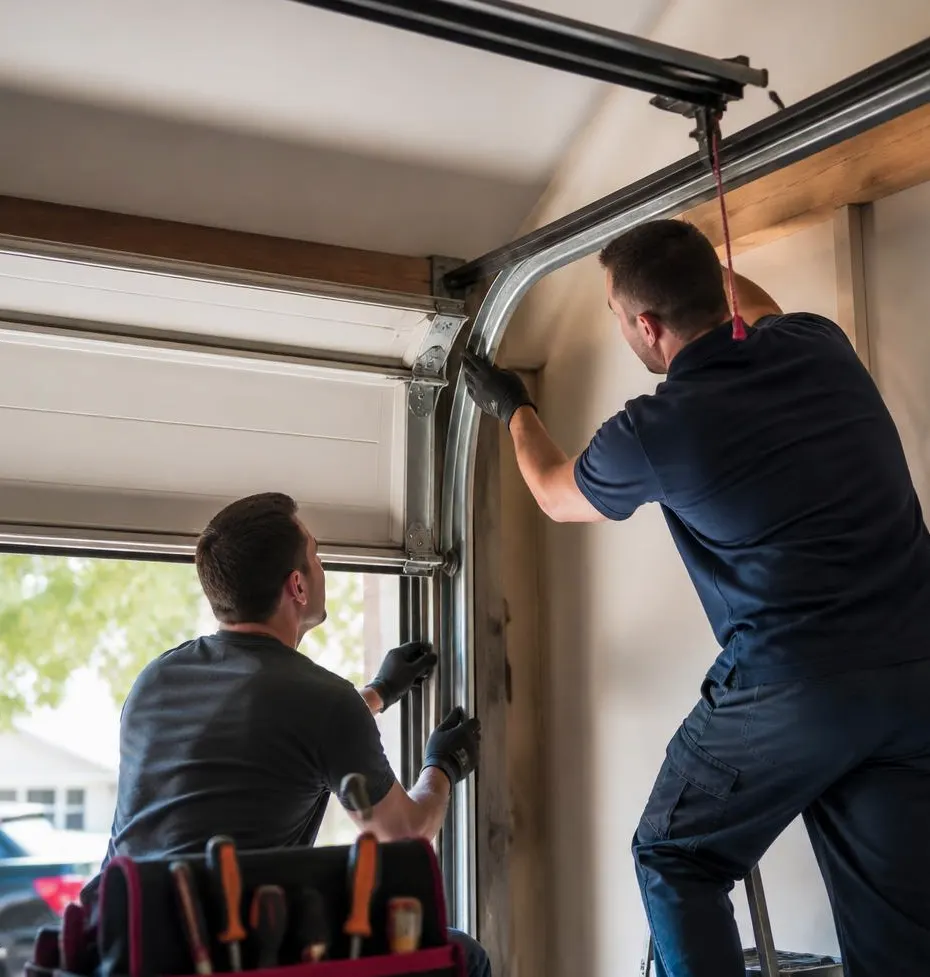
If you've noticed bowing panels, loose track brackets, or a door that's slow or uneven when it opens, that's worth a look before the next storm rolls through — not after. We handle garage door maintenance visits that catch loosened hardware and worn hinges early, and if a storm does cause damage, our emergency garage door service gets a door secured or repaired quickly so your home isn't exposed. We also install reinforcement kits and wind-rated replacement doors for homes with original, aging units.
If you're in Farmingdale, Howell, Freehold, Wall Township, Marlboro, Manalapan, Colts Neck, or Lakewood and want your garage door checked before nor'easter season really gets going, give Farmingdale Garage Door a call. We'll tell you straight whether your door needs reinforcement, repair, or replacement.